
COMMENCEMENT
Commencement will be livestreamed on YouTube at youtube.com/watch?v=NEIsG_3o-VQ beginning at 7 p.m.
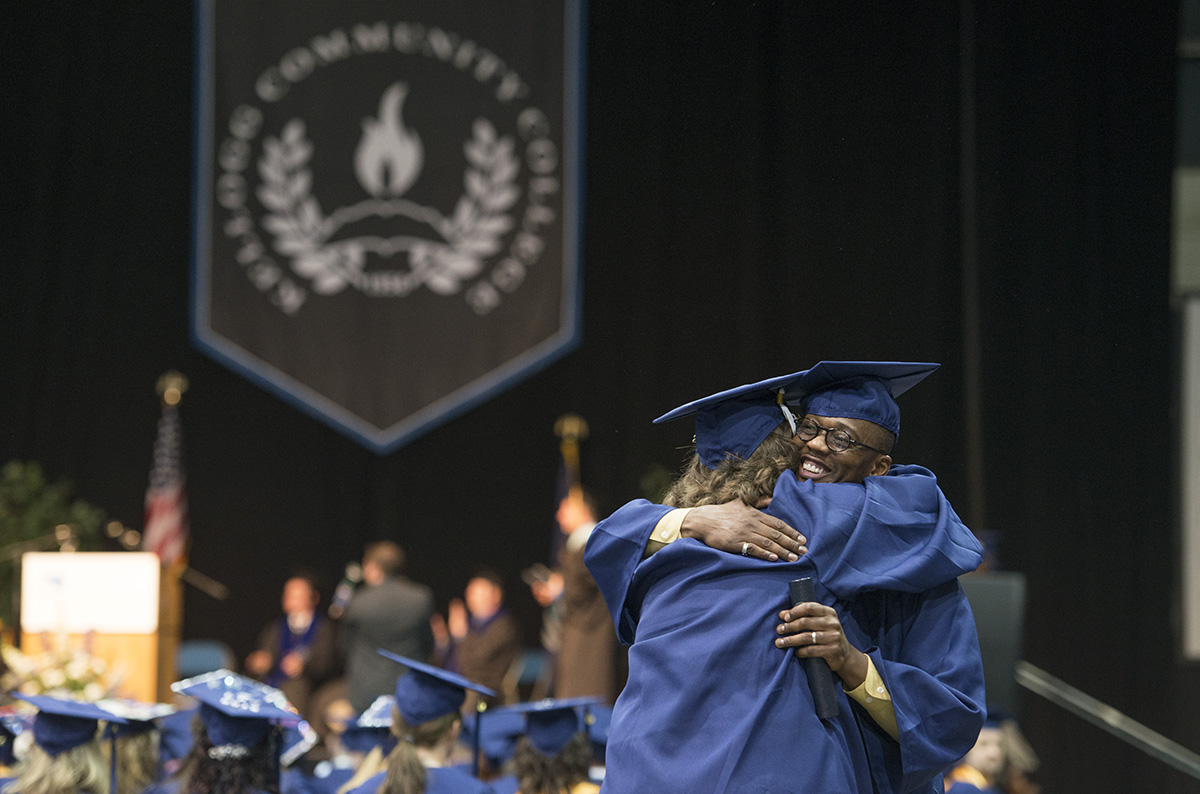
Kellogg Community College will celebrate the graduating Class of 2026 with an in-person Commencement ceremony starting at 7 p.m. Thursday, May 14, at Kellogg Arena, 36 W. Hamblin Ave. in Battle Creek. Attendees and celebrants alike can find more information below. Graduates, please note that additional details will be sent to your KCC email address from [email protected].
Your content goes here. Edit or remove this text inline or in the module Content settings. You can also style every aspect of this content in the module Design settings and even apply custom CSS to this text in the module Advanced settings.
Alma Mater KCC
Introducing KCC’s new alma mater—an inspiring anthem created through the collaboration of our talented faculty. The lyrics, written by English Professor Ron Davis, reflect the values that unite our campus community. Music Professor Dr. Gerald Case-Blanchard composed the original melody, and Dr. Mark Wells added rich harmonization to complete the piece.
Explore the links below to hear and learn more about this meaningful new tradition.
World Premiere of Alma Mater KCC, performed by the KCC Choral Union on April 21, 2024
Schedule
Kellogg Arena doors will open at 6 p.m. for guests and graduates.
Please enter through the main Box Office entrance (located on the rear side off of Jackson Street, adjacent to Festival Market Square).
Ceremony begins at 7 p.m.
Map
Parking
Please use the new entrance off McCamly Street South, marked by the green dot on the map below.
Additional parking is available throughout downtown Battle Creek through ABM Parking Services. Rates vary by location.
To view parking maps and learn more about fees, visit www.battlecreekparking.com.

The City of Battle Creek offers a variety of parking options in addition to the Kellogg Additional City of Battle Creek parking information is also available.
Regalia: Caps, Gowns & More
KCC has recently instituted royal blue caps and gowns, so prior years’ regalia (2023 or older) may not be worn. Purchasing your cap/gown at KCC’s Bruin Bookstore can be done in-person or you can submit the form via fax at 269-962-0995 or via email at [email protected] by Friday, March 20.
Cap and gown orders will be available for pick up at the Bruin Bookstore April 28 – May 12 during bookstore hours:
- 8 a.m. to 5:30 p.m. Mondays through Thursdays
- 8 a.m. to 4 p.m. Fridays
Honors Program members meeting all the graduation requirements prior to graduation will be contacted about the Honor Cords. If you have any questions, please email [email protected].
Members of the Phi Theta Kappa Honors Society are invited to wear stoles, which will be available for purchase in the KCC Bruin Bookstore at the time you pick up your cap/gown (April 28 – May 12). If you have questions, please email Student Life at [email protected].
Your degree program may offer additional regalia; information on those pieces will be communicated with you via your instructors and/or your KCC email.
If you wish to decorate your cap, the Student Life Office will have craft supplies you are welcome to use available starting April 27. Stop by and make your cap your own!
Local Restaurants
For those looking to continue their celebration beyond the Commencement ceremony, below you’ll find a list of eateries within roughly one mile of the Kellogg Arena. Where possible, reservations are recommended.
| Restaurant | Address | Phone | Hours | |
| The Alloy Restaurant | 50 Capital Ave SW Battle Creek, MI 49017 |
269-380-0320 | 6a-9p | reservations recommended |
| Barista Blues Cafe | 91 W Michigan Ave Battle Creek, MI 49017 |
269-968-8430 | 8a-2p | |
| Café Rica USA | 62 E Michigan Ave Battle Creek, MI 49015 |
269-441-0205 | 6:30a-4:30p | |
| Cafetal | 451 W Michigan Ave Battle Creek, MI 49037 |
269-753-1187 | 7a-2:00p | reservations recommended |
| Cereal City Nutrition | 182 Capital Ave NE Battle Creek, MI 49017 |
269-358-6245 | 7a-7p | $3 dollars off with a KCC Student ID |
| Clara’s on the River | 44 McCamly St Battle Creek, MI 49017 |
269-963-0966 | 11a-10p | reservations recommended |
| The Cricket | 36 W Michigan Ave Battle Creek, MI 49017 |
269-963-2725 | 11a-11p | reservations for upstairs dining recommended 20% off the entire tab for students wearing a cap and gown/ have a diploma tube |
| Griffin Grill & Pub | 38 W Michigan Ave Battle Creek, MI 49017 |
269-965-7206 | 11a-12a | |
| Handmap Brewing | 15 Carlyle St First Floor Battle Creek, MI 49017 |
269-441-0028 | 3p-10p | reservations recommended $4 dollars off pizzas for graduating students |
| Jimmy John’s | 25 Capital Ave SW Battle Creek, MI 49017 |
269-969-3966 | 10a-7p | |
| Kitchen Proper | 34 W Michigan Ave Battle Creek, MI 49017 |
269-753-1550 | 4p-8p | reservations recommended |
| Load A Spud Battle Creek | 80 W Michigan Ave Suite B Battle Creek, MI 49017 |
269-245-9128 | 11a-7p | 10% off for students with KCC Student ID |
| New Holland Brewing | 64 W Michigan Ave Battle Creek, MI 49017 |
269-213-8776 | 12p-10p | reservations recommended |
| Nina’s Taqueria | 248 Capital Ave SW Battle Creek, MI 49037 |
269-969-9448 | 11a-9p | reservations recommended |
| O.T.’S Up-N Smoke BBQ | 450 Capital Ave NE Battle Creek, MI 49017 |
269-963-7777 | 11a-9p | offers take-out only |
| Pastrami Joe’s Deli | 32 W Michigan Ave # 2 Battle Creek, MI 49017 |
269-788-9345 | 7a-7p | reservations recommended 50% off for students wearing a cap and gown |
| Pizza Rescue | 65 Calhoun St Battle Creek, MI 49017 |
269-753-1024 | 4p-8p | |
| Schlotzsky’s | 14 W Michigan Ave Battle Creek, MI 49017 |
269-963-2526 | 10a-7p |
Battle Creek Restaurants not listed who would like to celebrate with our newest Bruin alumni are invited to contact the Student Life Office at [email protected] or 269-565-2634 to be added.
Ceremony Photos and Recording
Our Kellogg Community College photographers shot thousands of photos at various 2025 graduation-related ceremonies. You can learn more about the photographs captured and find links to the Dropbox galleries via the link below.
KCC Daily: How to view 2025 Commencement and Pinning Ceremony Photos
The 2026 ceremony will be livestreamed on Kellogg Community College’s YouTube page during the event.
Overnight Guestroom Block - DoubleTree
Reservations can be made online by following this link: KCC Commencement CB. Please note, reservations must be made by 5:00 p.m. on 4/22 to receive the discounted rate of $155.00 + tax. Make sure you check the “Accessible Box” to show all availability.
If you prefer to make your reservations by phone, please call (269) 380-0320 and mention your Group Block Code (944)

What to Expect at Commencement
Graduates and their supporters are encouraged to participate in Commencement celebrations online by tagging social media posts with #AlwaysABruin.
The Class of 2026 is the 68th graduating class at KCC, which was founded in 1956. Graduates seeking more information should email [email protected] or call 269-565-2612.
